Emotional agitation stimulates obsessive-compulsive behavior and/or addiction. The latter can be viewed as 'compensation' for the former. For example depression can stimulate manic behavior, or stated alternatively, manic behavior can be viewed as compensatory behavior designed to alleviate depression.
If you want to address the self-destructiveness of the 'compensatory' behavior -- the obsessive-compulsion/addiction, then you need to trace this behavior back to the source of the emotional agitation.
Explore the full nature of the emotional agitation, explore the negative self-talk that may be exasperating the emotional agitation, and look for some better way to reduce this emotional agitation through talking your way through it in a more positive, productive direction either alone or in the company of your spouse, a close friend, and/or a therapist trained to deal with these matters...
Until you find a better way of dealing with your emotional agitation, the obsessive-compulsive, addictive behavior is likely to continue as your compensatory measure of dealing with it...often with continuing self-destructive results...
When Apollo can't find a way to successfully deal with a problem, or resolve a conflict, Dionysus is quite likely to take over the reigns of control of the personality -- sometimes with satisfying results, sometimes with self-destructive results, depending on the extent and nature of the impulsive and/or obsessive-compulsive, addictive type of behavior...
-- dgb, April 10th, 2010.
-- David Gordon Bain
-- Dialectic Gap-Bridging Negotiations...
-- Are Still in Process...
Saturday, April 10, 2010
Friday, April 9, 2010
Precious Memories...
Listening to an old Dylan album today brought me back in touch with this song...seemed to fit my mood today...dgb
Precious Memories (arr. by Bob Dylan)
As I travel down life's pathway,
Know not what the years may hold.
As I ponder, hopes grow fonder,
Precious memories flood my soul
Know not what the years may hold.
As I ponder, hopes grow fonder,
Precious memories flood my soul
Precious father, loving mother,
Glide across the lonely years.
And old homes scenes of my childhood
In fond memory appears.
Glide across the lonely years.
And old homes scenes of my childhood
In fond memory appears.
Precious memories, how they linger
How they ever flood my soul.
In the stillness of the midnight,
Precious sacred scenes unfold.
How they ever flood my soul.
In the stillness of the midnight,
Precious sacred scenes unfold.
Copyright © 1986 Special Rider Music
http://www.bobdylan.com/#/songs/precious-memories-arr-bob-dylan
...................................................................................................................................................
And this one...of which I cut out two pieces from the song...
Excerpts from Brownsville Girl by Bob Dylan...
Now I’ve always been the kind of person that doesn’t like to trespass
but sometimes you just find yourself over the line.
Oh if there’s an original thought out there, I could use it right now.
You know, I feel pretty good, but that ain’t sayin’ much.
I could feel a whole lot better,
If you were just here by my side to show me how.
Strange how people who suffer together have stronger connections
than people who are most content.
I don’t have any regrets, they can talk about me plenty when I’m gone.
You always said people don’t do what they believe in,
they just do what’s most convenient, then they repent.
And I always said, “Hang on to me, baby, and let’s hope that the roof stays on.”
Bob Dylan (Brownsville Girl)
http://www.bobdylan.com/#/songs/brownsville-girl
...................................................................................................................................................
And this one...of which I cut out two pieces from the song...
Excerpts from Brownsville Girl by Bob Dylan...
Now I’ve always been the kind of person that doesn’t like to trespass
but sometimes you just find yourself over the line.
Oh if there’s an original thought out there, I could use it right now.
You know, I feel pretty good, but that ain’t sayin’ much.
I could feel a whole lot better,
If you were just here by my side to show me how.
Strange how people who suffer together have stronger connections
than people who are most content.
I don’t have any regrets, they can talk about me plenty when I’m gone.
You always said people don’t do what they believe in,
they just do what’s most convenient, then they repent.
And I always said, “Hang on to me, baby, and let’s hope that the roof stays on.”
Bob Dylan (Brownsville Girl)
http://www.bobdylan.com/#/songs/brownsville-girl


Ideologies separate us. Dreams and anguish bring us together.
Heard this one on 'Criminal Minds' tonight...and looked up the author...
Ideologies separate us. Dreams and anguish bring us together.
-- Eugene Ionesco
From Childhood Traumacy To Transference Creativity (Sublimation)...Romantic/Erotic (Positive) Transference...and Angry, Destructive (Negative) Transference...All Rolled Into One...
Updated April 9th, 2010...with a 'mythological component' added to the original essay...dgb, April 9th, 2010.
Creativity is born from chaos...from the shadows of the personality, the shadows of the mind, the deep workings of the subconscious...
Creativity is born from chaos...from the shadows of the personality, the shadows of the mind, the deep workings of the subconscious...
So too is great destruction...as well as great creativity...born from the Shadows of the Personality...
There is an ongoing dialectic in the Shadows of the mind between great creativity and great destruction, between life and death processes...between healthy and toxic processes...They both play themselves out in our 'childhood to adult transference complexes'...the 'seeds of our remembered childhood traumacies, our remembered childhood narcissistic injuries, coming back, re-cycled, in a newer, fresher, creative and/or destructive format...in our 'counter-phobias'...as we re-create, repeat, and relive all over again -- in symbolic, metaphorical fashion -- these old childhood scenes, trying to turn the 'bad' (our 'inferiority feelings') into the 'good' (our 'mastery compulsion') but often the 'bad just becoming 'bad' all over again...indeed, sometimes even 'worse'...
Adult transference neuroses (and complexes) are generally initiated in either the encounters and/or the relationships of early childhood as perceived traumacies, or narcissistic (self-esteem) injuries; they create a 'hole' or 'gap' in the personality in the form of 'inferiority feelings', 'psychological wounds', and 'areas of inferior development' based on a combination of fear, anxiety, paranoia, and/or lack of self-confidence that keeps us 'away' from the area of our perceived 'weakness'; but then 'a funny thing happens on the way to the forum': our imagination and fantasies start to 'play' with our 'narcissistic (self-esteem) injuries, start to imagine us 'mastering' or 'conquering' them -- and our perceived childhood 'victimizer' -- and these narcissistic fantasies start to play themselves out as we grow older in the form of our 're-created and symbolic 'transference fantasies, obsessions, and mastery compulsions -- our 'transference complexes' -- that are designed to effectively 'erase' and/or 'overcome' our perceived childhood narcissistic (self-esteem) injuries and make us 'dialectically whole' again -- rather than 'dialectically split'. Sometimes this 'transference' strategy works; sometimes it doesn't. But we all play our own brand of 'transference (repair our childhood self-esteem) game'. A huge amount of 'cathected' energy is invested in this process -- a lifetime of 'cathected' energy (much like 'white and red blood cells rushing to the scene of a physical injury') -- and this is the realm of our transference obsessions, compulsions, addictions, and serial behavior patterns....
The only difference between our physical wounds and our childhood psychological wounds is that our physical wounds generally heal in good time; in contrast, our childhood psychological or self-esteem injuries rarely 'heal', we just 'gloss' them over, sometimes 'heal them temporarily', but like Satan waiting in the wings, our 'internalized childhood rejector' never fully goes away and is always looking for a new opportunity to 'strike a new blow to our old self-esteem wound' and/or to find new and creative/destructive ways of trying to 'compensate' for these old psychological wounds...
However, the real, greater or lesser 'Satan' waits for us not outside of us, but inside of us, does not come from some 'underground' world except the 'underground' world in our personality, is not foreign to us, but is us, or at least a part of us, can be quelled by our 'internal self-talk', can be embellished by our 'internal self talk', is always there to give us a hard time -- or even a very hard time -- and must be defeated in the conscious and subconscious realm of the psyche, and/or at least integrated in a positive way with the rest of the personality. Metaphorically, symbolically, and mythologically speaking, it is 'Satan' or to a lesser extent 'Dionysus' and 'Narcissus' who stimulate us to both the greatest of creative acts and also to the greatest of destructive acts. All of 'Satan', 'Dionysus', and 'Narcissus' originate in the Shadows of the Personality. They can either work with us when we integrate them creatively with the rest of our personality. Or they can work against us when we 'alienate' them from the rest of our Personality -- throw them out of 'Heaven' like God metaphorically threw Satan out of Heaven.
This is the way that Gods, Myths, Philosophers, and Psychologists all become conflated amongst each other. This is how the 'myth' of 'God', 'Heaven', 'Hell', and 'Satan' should be understood. We create our own private Hell when we 'split our personality' like 'God split Heaven into Heaven and Hell'....This is a symbolic, mythological rendition of what each and everyone of us do...when we 'split our Heaven and Innocence of Childhood' into 'accepted' and 'rejected' parts our our own personality. Like God, each and everyone of us 'throw parts of our personality away -- excommunicate these rejected parts of our own personality into the 'trash can' of our personality -- Purgatory, Hell -- where these parts tend to become 'infected', 'toxic', and recycled back through our subconscious and conscious personality to cause us the greatest of troubles. Psychoanalysis calls this 'the return of the repressed'. It might also be called 'the return of The Devil'. The Devil -- whether it be Satan, Dionysus, and/or Narcissus -- needs to be re-accepted, re-integrated, back into the personality. Satan needs to be re-accepted by God back in Heaven in order for Satan to lose his or her 'toxicity' and 'capability for evil'. And similarly, Adam and Eve have to be re-accepted by God back into Eden...Both the 'God and Satan' myth and the 'Adam and Eve' myth portray the 'splitting of the personality' into 'good and evil' on the basis of 'self-alienation and self-rejection.
Self-acceptance is the way back Home to both Heaven and Eden...
I got carried away in the last two paragraphs. I did not intend to take this essay -- indeed, in my original writig of this essay, I didn't take it -- into the realm of religion and mythology. But for some of you at least, the most open-minded of you, it perhaps may show you how God, Myths, Religion, Philosophy, and Psychology -- are all connected and integrated -- just like the human personality is all connected and integrated -- or at least it is supposed to be when everything is 'healthy'.
Serious dialectic splits in -- and 'alienation' of certain parts of -- the personality cause 'neurosis', 'schizoid and psychotic breaks', and all other forms of 'psychopathology'.
'Dialectic re-integration, unity, and wholism', is the way back to psychological health.
Metaphorically and mythologically speaking, 'God' and 'Satan' have to break their impasse with each other, meet in 'The Central, Conscious Ego', and resolve their differences between 'good' and 'bad', 'right' and 'wrong', 'creativity' and 'destruction/self-destruction'....
Religion and mythology are 'external projections' of the different types of 'wars' that occur in our own individual and collective personalities...The answer to 'healing' the psyche does not revolve around 'burying Satan deeper into Hell -- i.e., 'The Shadows of our Personality'. Rather, 'healing' involves re-integrating in a positive way -- God and Satan so that both can live more peacefully in, and share, 'Heaven'.
The greatest of destructive and self-destructive acts occur by those who think they are 'marginalized' by the rest of society, and by those specific parts of our own individual personalities that think they are 'marginalized' from the rest of (or other parts of) the personality...
Messages from our subconscious -- whether in the form of a dream, a fantasy, a nightmare, a creative and/or destructive piece of work -- are message to ourselves, to our Central Ego...They are allusions to immediacy...and allusions to self-awareness and self-contact...
That is not illusions (as in falsehoods) but rather allusions (as in coded and interpretable messages)...
There is an underlying interaction in the Subconscious between past memories and particularly past traumacies, messages from our 'Transference Memory Templates' in the form of anxieties, fears, phobias, paranoias, nightmares, warning signs, messages from our Potential Self in the form 'directional signposts' and 'roadblocks to personal growth', messages in the form of 'mythological symbolism', messages relative to potential destructive elements and forces in the personality...
All of these different 'allusions to immediacy' get mixed together in the Subconscious Personality, in the Shadows of the Personality, in our own personal version of 'Hegel's Hotel'...and through our dreams, our fantasies, our creative expressions -- through each and every way we have of 'projecting' our internal, subconscious world of fears and phobias, counter-phobias, transferences, sexual and/or violent impulses, growthful and/or toxic needs -- all of these elements come driving up from the subconscious, are met with, and integrated with a 'Subconscious Censor' (Freud called this aspect of the sub/unconscious 'the dream censor'), and surface in the conscious personality in the form of 'coded messages' or 'allusions to immediacy' which, to repeat may contain a mixture of both growthful and toxic elements....
Our 'transference complexes and neuroses' usually contain a combination of 'growthful and toxic elements' that need to be guided properly, sometimes with the support and insights of a good psychotherapist...Do we keep going back to the same 'transference merry-go-round', the same 'transference roller coaster', or are there 'new modifications and editions in our transferences'
that are taking us in a 'healthier direction'?
Are we going back to the same 'destructive and/or self-destructive elements'? Or are we progressing and evolving in newer, better, more personally meaningful and growthful directions?
What kind of personal demons and monsters and skeletons and ghosts of yesterday and yesteryear are we still fighting with?
How are our transference complexes/neuroses working their way into our present lives?
What are we still trying to prove?
Who are we still seeking approval and/or love from?
Who are our ongoing 'internal rejectors', our ongoing 'bad internal objects' that we keep 're-projecting back into our present world'?
How much 'distortion' is there in our transference projections as opposed to 'accurate perceptions'?
Accurate perceptions that seemingly come out of nowhere -- we often call these 'intuitions' -- often if not always come from deep in our subconscious, our transference complexes that we are 'perceptually projecting' into our present world...
Perhaps the main reason that I can look back at one of Freud's earliest memories -- probably his earliest -- and interpret it with a 'transference clarity' that thousands of other psychoanalysts have been unable to do -- is because my first 'transference memory' is very similar in structure and process... Also, I have not been taught -- or shall I say 'brainwashed' -- to think within the 'Classic Freudian Box'...
In Freud's first memory, he burst into his parents' bedroom to discover his parents engaged in sexual intercourse -- an activity that the very young Freud (3 or 4 years old) could not comprehend at the time of his shocking discovery...He was greeted (not surprisingly) by his dad yelling at him to get out of the room and close the door....
In Ernest Jones' famous biography of Freud, Jones called the memory 'banal' and basically lacking in significance (presumably because it was a 'conscious early memory' and not a 'repressed early memory') except that perhaps it at least partly explained the beginning of Freud's 'sexual curiosity'....
In contrast -- and based mainly on my 2 years of Adlerian training -- I diagnose this 'conscious early memory' of Freud's as a 'full-blooded transference memory', easily the most important transference memory in Freud's subconscious personality.
Every time as an adult, when Freud walked into his 'Classic Psychoanalytic Room' and saw a woman (or man) lying there on the 'couch', Freud was subconsiously reliving the psycho-dynamics of his earliest transference memory. Freud could say all he wanted to that the reason he brought 'the classic couch' into his therapeutic room is because 'he didn't want to be looking at his clients' eyes' and/or he wanted his clients to engage in undistracted free associations without them being led astray by their counter-reactions to the therapist's reactions to what the client was saying and thinking...In other words, he seemingly wanted his clients' projections and transferences to be basically 'unspoiled' by client-therapist facial and bodily reactions...This may all true but it doesn't take us deep enough into Freud's own transference makeup...
We all have a 'projective re-creation compulsion' and Freud was no different. People who land in, and stay in, certain jobs and careers for a long time generally have a 'transference reason' for doing so...And thus, it was with Freud....Freud had basically 'projectively re-created' his earliest transference memory in his adult life in the makeup and setup of The Classic Psychoanalytic Room -- complete with a 'couch' subbing in for the 'bed' in his earliest transference memory/traumacy...and 'one of his two projected parents' lying symbolically and metaphorically on the couch/bed of The Psychoanalytic Room...
If Freud was having trouble 'looking into his clients' eyes'...it was probably because he was 'projectively transferring' his father's critical/rejecting eyes and voice into the eyes of his clients...Freud's father, in his first and primary transference memory, played the part of his 'internal bad or rejecting object' which would then be projectively transferred into the Psychoanalytic Room onto the person (especially if the client was male) lying on the couch...
This has been said before -- and I don't mean this judgmentally of Freud because we all have these same types of cognitive transference processes working inside of us -- but it needs to be repeated: Freud was basically a 'closet voyeur'...that made up 'the inner libidinous essence' of his outer 'scientific and clinical curiosity'....And in this regard, Freud didn't want his voyeurism, his 'projective re-creation compulsion', his 'repetition compulsion', and his 'mastery compulsion' to be interrupted by anyone's negative judgments...In effect, vicariously, he was 'projectively telling his dad to 'shut the *** up because, come Hell or high water, he was going to find out every possibility of what was going on in his parents' bedroom when he was so rudely ejected from their room by his dad at such a young, naive, and ignorant age, incapable of understanding the full essence and nature of such mind-boggling, hidden, human narcissistic activities'...
Freud would spend his whole life seeking -- rather 'obsessing' -- over such a complete (sexual and defensive) understanding...
In the 'repetition compulsion' component of the re-enactment of Freud's earliest transference memory, Freud was vicariously and symbolically rejected by a current-day edition of his 'rejecting internal object', i.e., his dad ejecting the young Freud from the parental bedroom...This would apply at least partly to Breuer, Fliess, Jung, Adler...i.e., whoever was 'subconsciously construed by the adult Freud as 'ejecting him from their respective individual presence'...Freud -- based on his father being his lifelong 'internal rejecting object' within his personality, was both very sensitive to 'masculine (projected paternal) criticism' and conversely was also very quick to externalize and play out this 'superior, holier than thou, rejecting object' against other men who he criticized like his father criticized him...
Freud's most 'libidinous' masculine transference projections were most apparently Fliess and Jung...In these two 'projected masculine transference figures', Freud would seem to have seen important elements of his 'father's judgmental character'...which he then played out his 'primary transference complex/neurosis' in his respective relationship with each of them...until respectively, both transference relationships blew up on strong negative (mutual) judgments...
In the 'mastery compulsion' component of the re-enactment of Freud's earliest transference memory, Freud would play the part of 'the rejector' as opposed to the 'rejected'....a 'transference reversal' from the role of 'rejected underdog or underego' to the role of 'rejecting topdog or Superego'...i.e, this can be interpretively construed as 'compensatory transference identification with his internal rejecting father'....
How many men as an adult did Freud symbolically and/or literally 'eject from his room'....(Ferenczi and Anna Freud labelled this 'serial' transference phenomenon as 'identification with the aggressor'...or by extension...'identification with the victimizer, abandoner, rejector, assaulter, betrayer....') There were a lot of 'serial masculine rejections' in Freud's adult life...too many for me to completely here and/or to try to figure out exactly 'who rejected who' because in a lot of cases it was 'mutual'....
Breuer, Fliess, Adler, Stekel, Jung, Rank, Ferenczi, Perls...
Freud was a 'serial transference rejector of men'....
One day I will maybe share my own first transference memory. Perhaps I have already exposed it in a past essay. But for the time being, I don't really want a hundred or a thousand professional or amateur 'psychoanalysts' coming back at me with their own 'transference interpretations of my first memory'...
Our transference revelations can reflect some of our most intimate self-exposures...
This can be both a good and/or a bad thing depending on whether they are used for or against you...
At the deepest level, our transference complexes, neuroses, and obsessive-compulsions display a humanistic-existential but almost 'incessantly unsatisfiable' wish for self and social acceptance and love...
But mixed in with this obsessive-compulsive wish for 'self-social healing' is a 'toxic overload' of the same 'transferred' event and attitude that contributed to the original problem and 'self-esteem void in the personality' in the first place...Thus, transferences can display themselves like 'infected sores' with poisonous pus spilling over the top of the open and infected self-esteem wound...
A 'victimized child becomes a victimizing adult'....
This is the mark of the 'overspilling toxic poison' of 'transference gone bad' (negative transference, transference rage, narcissistic rage...internalized and/or externalized transference rage...)
Underneath all this toxic transference poison is a 'self-rejecting child' who paradoxically wants you to actually play out the role of his or her rejecting/exciting transference figure...
Reject me, then love me, reject me, then love me...in the sphere of the transference, this is how we more often than not want our transference -- our re-creation, repetition, and mastery compulsion -- played out...
This is the 'transference essence' of the time tried love game of 'playing hard to get'...
We want ego resistance before we get ego satisfaction...
Resistance increases tension, increases potential energy, like the 'tautness of a retracted bow and arrow'...like a roller coaster slowly going uphill....increasing both human fear and excitement...
And then the 'release of the bow'...the 'rush of the roller coaster downhill'...
And then the rush of a 'narcissistic-egotistic transference climax and release' which is all too similar to, and basically, the psychological equivalent of a 'bodily orgasmic release'...It is not surprising for humans to ideally seek both simultaneously...in that 'symbiotic union' not only between ourselves and our partner, but also ideally, both psychologically and physically at the same time between the acceptance by, and/or construed mastery over an 'external, fantasized transference rejecting/exciting object' as well as mastery over our own 'self-construed, weak, rejected internal object (or ego-state or underego)'...all of this coming together psychologically and sexually in The Perfect Storm...in conjunction with our 'Mastery of The Perfect Storm' and ideally our Mastery of this Perfect Storm culminating in our own tightly construed idea of the 'Perfect Transference Orgasm'...(I'm starting to write like Wilhelm Reich here...)
Now, not all transferences are erotic, and not all erotic transferences are as tightly wound as I am suggesting above...but still...where transference, love, lust, rejection, anger, resentment, hate, anxiety, grief, guilt...are all intertwined together, or even some smaller subset of these paradoxical emotions...is it any wonder why love becomes so complicated and why all rationality and common sense seemingly flies out the window?
Whether this 'Perfect Transference Storm' is legally and/or politically and/or morally and/or socially tolerated or not depends on whether or not any 'legal boundaries' are being crossed...It also depends on how much 'transference toxicity' is being projected and/or acted out in the transference re-creation...
Some erotic transferences require the help of a therapist -- that is for sure, if not more than a therapist -- depending on the actual nature of the content of the transference fantasy...dominance, submission, bondage, sadism, masochism, seduction, exhibitionism, voyeurism, assault, rape, fetishes, incest, violence, abandonment...some of these are clearly transference obsessions that cross well past the line of legal acceptability...At the extreme polarity, we moves into the territory of 'serial victimizers (rapists,killers)'...and conversely the 'serial victims'....Indeed, there is always an element of both victimizer and victim in the same person...and that applies to all of us...We are all 'serial rejectors' in some fashion or another...specifically, in the fashion of our original childhood transference rejector...
Transference is generally a 'Pandora's Box'...We open the box looking for gold and treasure...and indeed, we might get some of that...but we are likely to find plenty of 'snakes' surrounding the treasure as well...Open with caution...and be aware of the paradox of love, lust (positive romantic and erotic transference) followed by anger, and resentment (negative transference) a little further down the line...
One way or the other, whoever named 'The Seduction Theory' the Seduction Theory (it wasn't Freud) used this label for the wrong psycho-dynamic phenomenon...
What it should have been used for is the idea, the theory, and the phenomenon of an adult in the midst of a 'transference obsession' aiming to seduce a modern day version of his or her original childhood transference rejecting/exciting object...
That is what should have been -- and still should be -- labelled as 'The Transference Seduction Theory'; not Freud's 1896 theory of Childhood Sexual Assault leading to Hysteria...
Freud's Traumacy Theory was partly right in 1895 (with Breuer); Freud's 1896 Seduction Theory was also partly right as a potential and actual subset of his earlier 1895 Traumacy Theory; and so too was Freud's post 1896 evolving Fantasy, Childhood and Adult Sexuality, Dream, Oedipal, Transference, Narcissistic, Object Relations, Life and Death Instinct, and Splitting of The Ego...
The only thing that Freud couldn't do because he was more of an 'Aristotelean either/or theorist' and also partly a 'post-Hegelian dialectically opposing theorist' ...but not a good enough 'dialectically integrative theorist' (other than his work on 'compromise formations in the ego')....to repeat, the only thing that Freud couldn't do was he couldn't bring all of his many different theories, all of the many different pieces of his work -- many of them self-rejected -- he couldn't bring all of these valuable pieces into the same room together...he couldn't blend them all together into one Grand Narrative...into one Grand Symphony or Painting...this is what he couldn't do before he died...Freud couldn't think outside his own tightly construed 'Freudian Box'...
So I will do it for him...
Because I can think inside and outside of all Freudian, post-Freudian, and anti-Freudian Boxes...
That is my Grand Narrative, my Grand Symphony, my Grand Painting...
That is Hegel's Hotel....
Excuse my narcissism....
Enough...
-- dgb, March 6th, 2010
-- David Gordon Bain
-- Dialectic Gap-Bridging Negotiations...
-- Are Still in Process...
.....................................................................................................................................
In reality, we are still children. We want to find a playmate for our thoughts and feelings.
-- Wilhelm Stekel
.........................................................................................................................
Wilhelm Stekel
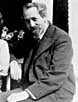 Of Polish origin, Wilhelm Stekel initially contacted Freud in 1902 for a short analysis. He then joined the group of Wednesday eveningswhen he met Alfred Adler. It is together with Adler that, following the Weimar congress, he founded, the Zentralblatt für Psychoanalyse, whose direction they assumed.Freud's correspondence needs to be read to note the extent of his poor regard for the two above, which caused him many torments. Whereas Adler had broken in a definitive way, Stekel remained much more ambivalent. Taking as a pretext the difference in opinion regarding the publication of a text by Tausk, Stekel resigned from the Vienna Association of Psychoanalysis, but refused to give up his position with Zentralblatt before the First World War ended its publication.
Stekel thereafter tried to join Freud again but the latter did not want to resume the old differences.Stekel practiced a method of short analysis implying a more active participation on the part of the therapist. He is not really known to have had any disciples.
Copyright René DesGroseillers
.....................................................................................
From Wikipedia...
Wilhelm Stekel (March 18, 1868 – June 25, 1940) was an Austrian physician and psychologist, who became one of Sigmund Freud's earliest followers, a self-described apostle.[1] He later had a falling-out with Freud.[2] His works were translated in many languages.
Contents [hide] |
[edit]Career
Born in Boiany, Bukowina, he wrote a book called Auto-erotism: A Psychiatric Study of Onanism and Neurosis, first published in English in 1950. He is also credited with coining the term paraphilia, to replace "perversion."[3] Stekel contrasted what he called "normal fetishes" from extreme interests, "They become pathological only when they have pushed the whole love object into the background and themselves appropriate the function of a love object, e.g., when a lover satisfies himself with the possession of a woman's shoe and considers the woman herself as secondary or even disturbing and superfluous (p. 3).[3]
He analysed, among others, the psychoanalysts Otto Gross and A. S. Neill.
A biographical account appeared in The Self-Marginalization of Wilhem Stekel (2007) by Jaap Bos and Leendert Groenendijk, which also includes his correspondence with Sigmund Freud.
[edit]In popular culture
Stekel is quoted in J. D. Salinger's The Catcher in the Rye as saying, "The mark of the immature man is that he wants to die nobly for a cause, while the mark of the mature man is that he wants to live humbly for one" (p.?).
It has also been speculated that Stekel was the analyst after which Italo Svevo modeled the narrator in his famous Confessions of Zeno.
Think inside and outside the box....dgb
Thursday, April 8, 2010
A Distinction Between 'The Will to Power' and 'The Will to Socially and/or Politically Assert One's Power'
To build on the last article...
I have defined the 'will to power' as the 'will to free choice'.
If I choose to be 'assertive' at a particular time in a particular context, then that is the way that I have chosen to exercise my will to power.
If I choose to be 'passive' at the same point in time, in the same context, then this too would reflect the way that I have chosen to exercise my particular 'will to power' at that particular moment in time.
Now it could easily be argued that if I have chosen to be 'passive' in a particular context, at a particular point in time, then I have in effect chosen not to exercise my 'will to power'. This would be a different and more specific definition of the 'will to power'.
However, I think of Gandhi in jail going on a hunger strike, and would anyone argue with me that Gandhi was not only using his own particular style of 'will to power' in that particular time and context, but also that he was using his own unique will to power to impose his power -- i.e., to deliver a very powerful political message.
The same goes for Martin Luther King in his own particular way. He could have chosen a different way, a different style of delivering his own 'will to power'. He could have advocated 'violence'. He could have chosen to take a more militant route. But he didn't. He continued to rhetorically advocate and trumpet democracy and non-violence. And in this regard, he was one of the most effective social activists who ever lived.
The 'will to power' is not always about delivering an 'effective social or political message'.
Nor is the 'will to power' always about choosing a type of behavior that is 'healthy' and/or 'productive'.
Nor is the 'will to power' necessarily about 'imposing one's power over other people'.
The 'will to power' can be about all of these. And it can be about none of these.
In the end, I am defining the 'will to power' as 'freedom of choice' -- even if that choice turns out to be 'non-productive', 'destructive', and/or 'self-destructive'.
If a particular person's 'will to power' is always about 'submission to the perceived power of other people', then this is still the direction that the person has chosen to exercise his own unique brand of 'self-power' or 'will to power'. It may be self-destructive. It may even be self-annihilating. But still it is the person's own choice of the way that he or she is exercising his or her own 'will to power'.
The concept -- the way I have defined it here -- is almost, if not, identical to the way that Adler defined his concept of 'superiority striving'. Or -- in the case of more 'serial behavior patterns' -- his or her own particular 'lifestyle choice'. If we introduce my own particular brand of DGB post-Freudian humanistic-existential theory here, then we could talk about a person's 'transference choices' -- heavily influenced and/or determined by childhood events, particularly traumacies, but still 'choices', none the less. And as such 'will to power' choices.
Now, if we want to talk about a person's 'will to assert his or her power', then that is a different kettle of fish.
As soon as I commit my fingers to the keyboard I am typing on -- in the process of writing a new essay -- I am seeking to 'impose my will to power' in the sense of 'rhetorically persuading' my readers to follow my own line of thinking. This, you may, or may not, choose to do. But I am putting forth my best rhetorical argument with this goal in mind -- or at least with the goal of 'stimulating new directions and dimensions of integrative thinking, feeling, and action'.
Every essay in Hegel's Hotel written by me is written with this intent. As such, each essay is not only a reflection of my own unique brand of 'will to power' -- but also my own unique style of 'attempting to impose' (as in rhetorically attempting to persuade you, in a democratic manner, to follow my own particular line of thinking) the unique content of my will to power on the current and future evolution of philosophy and psychology as well as the potential direction of your own thinking, feeling, and action in a way that is different than if you had not written the particular essay you are reading.
Thus, to conclude, DGB Philosophy makes the following distinction between a person's own unique brand of 'will to power' (as in freedom of choice and direction of movement in his or her thoughts, feelings, wishes, and actions) on the one hand, and a person's wish and effort to 'socially and/or politically impose his or her own will to power on the person or people he or she wishes to influence'. This latter form of the will to power we might label as a person's 'social and/or political will to power' -- as in an effort made in the direction of 'social and/or political persuasion'.
Stated differently, my own particular usage of the 'will to power' is all inclusive of all 'freedom of choice' whereas 'the social and/or political will to power' more particularly specifies any and/or all righteous, democratic, rhetorical, narcissistic, persuasive, coercive, and/or manipulative attempts at imposing one's will in a social and/or political setting......both well-intended and/or evil-intended ).
One more concept distinction in this regard is 'the will to self-empowerment'. This is designed to be an always 'healthy form of the will to power' even though it may include elements of both the other two. 1. It involves 'free choice'; 2. it involves 'social assertion of one's will to power'; and 3. it involves 'self-actualization' of our innermost capabilities, skills, and talents...
I hope that brings greater clarity to my usage of -- and my intended meaning for -- the concept of 'the will to power'.
-- dgb, April 8th, 2010.
-- David Gordon Bain,
-- Dialectic Gap-Bridging Negotiations...
-- Are Still in Process...
I have defined the 'will to power' as the 'will to free choice'.
If I choose to be 'assertive' at a particular time in a particular context, then that is the way that I have chosen to exercise my will to power.
If I choose to be 'passive' at the same point in time, in the same context, then this too would reflect the way that I have chosen to exercise my particular 'will to power' at that particular moment in time.
Now it could easily be argued that if I have chosen to be 'passive' in a particular context, at a particular point in time, then I have in effect chosen not to exercise my 'will to power'. This would be a different and more specific definition of the 'will to power'.
However, I think of Gandhi in jail going on a hunger strike, and would anyone argue with me that Gandhi was not only using his own particular style of 'will to power' in that particular time and context, but also that he was using his own unique will to power to impose his power -- i.e., to deliver a very powerful political message.
The same goes for Martin Luther King in his own particular way. He could have chosen a different way, a different style of delivering his own 'will to power'. He could have advocated 'violence'. He could have chosen to take a more militant route. But he didn't. He continued to rhetorically advocate and trumpet democracy and non-violence. And in this regard, he was one of the most effective social activists who ever lived.
The 'will to power' is not always about delivering an 'effective social or political message'.
Nor is the 'will to power' always about choosing a type of behavior that is 'healthy' and/or 'productive'.
Nor is the 'will to power' necessarily about 'imposing one's power over other people'.
The 'will to power' can be about all of these. And it can be about none of these.
In the end, I am defining the 'will to power' as 'freedom of choice' -- even if that choice turns out to be 'non-productive', 'destructive', and/or 'self-destructive'.
If a particular person's 'will to power' is always about 'submission to the perceived power of other people', then this is still the direction that the person has chosen to exercise his own unique brand of 'self-power' or 'will to power'. It may be self-destructive. It may even be self-annihilating. But still it is the person's own choice of the way that he or she is exercising his or her own 'will to power'.
The concept -- the way I have defined it here -- is almost, if not, identical to the way that Adler defined his concept of 'superiority striving'. Or -- in the case of more 'serial behavior patterns' -- his or her own particular 'lifestyle choice'. If we introduce my own particular brand of DGB post-Freudian humanistic-existential theory here, then we could talk about a person's 'transference choices' -- heavily influenced and/or determined by childhood events, particularly traumacies, but still 'choices', none the less. And as such 'will to power' choices.
Now, if we want to talk about a person's 'will to assert his or her power', then that is a different kettle of fish.
As soon as I commit my fingers to the keyboard I am typing on -- in the process of writing a new essay -- I am seeking to 'impose my will to power' in the sense of 'rhetorically persuading' my readers to follow my own line of thinking. This, you may, or may not, choose to do. But I am putting forth my best rhetorical argument with this goal in mind -- or at least with the goal of 'stimulating new directions and dimensions of integrative thinking, feeling, and action'.
Every essay in Hegel's Hotel written by me is written with this intent. As such, each essay is not only a reflection of my own unique brand of 'will to power' -- but also my own unique style of 'attempting to impose' (as in rhetorically attempting to persuade you, in a democratic manner, to follow my own particular line of thinking) the unique content of my will to power on the current and future evolution of philosophy and psychology as well as the potential direction of your own thinking, feeling, and action in a way that is different than if you had not written the particular essay you are reading.
Thus, to conclude, DGB Philosophy makes the following distinction between a person's own unique brand of 'will to power' (as in freedom of choice and direction of movement in his or her thoughts, feelings, wishes, and actions) on the one hand, and a person's wish and effort to 'socially and/or politically impose his or her own will to power on the person or people he or she wishes to influence'. This latter form of the will to power we might label as a person's 'social and/or political will to power' -- as in an effort made in the direction of 'social and/or political persuasion'.
Stated differently, my own particular usage of the 'will to power' is all inclusive of all 'freedom of choice' whereas 'the social and/or political will to power' more particularly specifies any and/or all righteous, democratic, rhetorical, narcissistic, persuasive, coercive, and/or manipulative attempts at imposing one's will in a social and/or political setting......both well-intended and/or evil-intended ).
One more concept distinction in this regard is 'the will to self-empowerment'. This is designed to be an always 'healthy form of the will to power' even though it may include elements of both the other two. 1. It involves 'free choice'; 2. it involves 'social assertion of one's will to power'; and 3. it involves 'self-actualization' of our innermost capabilities, skills, and talents...
I hope that brings greater clarity to my usage of -- and my intended meaning for -- the concept of 'the will to power'.
-- dgb, April 8th, 2010.
-- David Gordon Bain,
-- Dialectic Gap-Bridging Negotiations...
-- Are Still in Process...
Wednesday, April 7, 2010
Just What Exactly is 'The Will to Power'?
Words -- and their meaning -- can be troublesome things. And the words, or concept of, 'the will to power' is no different. It can be a real 'head scratcher' if we want to explore the full realm of different possible 'semantic' interpretations of its meaning...
Here is how one of my most 'feedback engaging' readers framed a few of the difficult questions around this concept...
..............................................................................................................................
Nick Pappas said...
Here is how one of my most 'feedback engaging' readers framed a few of the difficult questions around this concept...
..............................................................................................................................
Dave,
Interesting theme with suggestive comments. Will you say more about will to power and will to egalitarianism? Is egalitarianism itself a will to power? Is every opposite willing itself to power over its rival? If so, then what is will to power itself? What can oppose it?
Nick
pappasnick.typepad.com
Interesting theme with suggestive comments. Will you say more about will to power and will to egalitarianism? Is egalitarianism itself a will to power? Is every opposite willing itself to power over its rival? If so, then what is will to power itself? What can oppose it?
Nick
pappasnick.typepad.com
.........................................................................
Try to get your head around any of these questions!!
Nick: Is egalitarianism itself a 'will to power'?
Dave: Yes.
Unfortunately, I don't have Nick here to play out my 'alter philosophical ego' so I will have to 'stand in for Nick' and play out this role myself in the direction that I think Nick was going with this semantically perplexing concept of 'the will to power'...
Dave for Nick: Okay, let us take this line of thinking to an even greater extreme... Is 'the will to submission' a form of 'will to power'?
Dave for Dave: Yes.
Dave for Nick: So if a 'will to submission' is a form of will to power, and a 'will to dominance' is also a form of will to power, then it sounds like a 'will to power' could, or can, mean anything...In the words of Nick, is there anything that can 'oppose' the 'will to power'?
Dave for Dave: No, there is nothing that can oppose the 'will to power' IF by 'will to power' what we are actually coming down to is a 'will to individual and/or group choice'.
For example, if I choose to 'submit', I am exercising my 'will to choice'; in effect, my 'will to choose' becomes my 'will to power' whether I use this 'will to power' in healthy and/or pathological ways...What if I choose 'not to choose'? Well, this too is a 'choice'. And by exercising our 'freedom of choice', we are also exercising our 'will to power'...even if this 'will to choose/choice/power', in effect, subverts our sense of 'self-power' in a more restrictive sense of the meaning of 'power' by my, for example, choosing to 'give up all my sense of power' to 'your authority' or 'dominance' over me...
'Approval-seekers' or 'pleasers' or 'disapproval-avoiders' are exercising their own particular rendition of their own 'will to power'. They choose to seek 'approval' over say choosing what they think is 'right'...
In contrast, a 'righteous power-seeker' will more likely overtly assert his or her individual sense of righteousness -- unless he or she has a greater perceived need for 'approval' or a greater perceived need for 'self-protection' than he or she does a need to overtly assert his or her righteousness...
It is not uncommon to get a 'mixed' character type that chooses to be 'covertly as opposed to overtly righteous'....this is a 'righteous Apollonian (anal) type' mixed with an 'approval-seeking ('I need your love and acceptance; therefore, I give you what you want in order to try to get this love and acceptance from you...') type...
In conclusion then, from a DGB perspective, the will to power is essentially the same as a 'will to choice'...and as long as we can choose between different lines of behavior, then we are also exercising our own more or less unique version of our own 'will to power'...different but often similar, from context to context, from relationship to relationship, from encounter to encounter, from moment to moment...until we are dead and cannot choose anymore...
This is my Adlerian-Gestalt-Humanistic-Existential influence, incidentally...
I partly oppose Freud on the issue of 'unconscious determinism'. Again, being a post-Hegelian, dialectic thinker, I take the midpoint between 'determinism' and 'freedom' -- bringing into existence the dialectically integrative idea of 'existential freedom of choice' -- and accountability for this choice -- on a bed of strongly influencing underlying factors such as childhood upbringing, subconscious psycho-dynamics, hereditary genetics, and current environmental factors...
-- dgb, April 7th, 2010,
-- David Gordon Bain,
-- Dialectic Gap-Bridging Negotiations,
-- Are Still in Process...
......................................................................................................................
'The Devil Made Me Do It!!' On Self-Accountability -- And Integrating 'The Disowned' With The 'Owned'...The 'Marginalized' With The 'Dominant'...
Freud was an atheist. I'm not saying this is necessarily good or bad. But basically, he believed that 'God' is an 'external projection' of our own 'internal psychological forces' -- and particularly, one force, one wish, one choice, to believe in a Creator and an 'Ultimate Force' that is either behind our own individual choices, and/or is so great, so important, that we become willing to 'submit' to what we believe 'God wants us to do'? But how do we know what God wants us to do except through our own choices of what we want to believe God wants us to do? One person might choose to believe that God wants us to go out and be 'kind to all people'...While another person may choose to believe that 'God wants us to go out and kill anybody and everybody who does not believe in the same God that we do'...
Who's right? Who's making the choice? God or us?
I say we are all 'accountable' for our own choices, our own beliefs, our own values, our own actions...
And anyone who chooses to believe anything else other than 'self-accountability for one's own actions' is 'choosing to run away from, avoid, escape from, bury his or her own head in the sand from, his or her own individual freedom to make choices...
That goes for 'choosing to give God responsibility for making us choose what we ourselves choose', and it also goes for any Freudian theory of determinism which is cloaked in self-deception as well.
Most of us are fully aware of the type of thinking that comes out of our 'id'. First, understand that 'the id' is only a concept and a label that Freud invented in order to help us understand how the personality works. Look at 'the id' as a 'teaching device'. It is a 'classification device'. Anything to do with 'sexuality, sensuality, pleasure, hedonism, aggression, violence, evil, immoralism...' we lump into our teaching device, our classification device, that we then say is 'responsible' for these types of thoughts, feelings, and/or impulses. They may start in our 'unconscious' but here again we have a 'troublesome word' that seeks to avoid self-responsibility, self-accountability...'The devil made me do it'. The 'id' made me think of it'...Same idea...different starting point, different name...people have lots of different names and different 'starting-points' for basically the same ideas...The 'id' at least recognizes that the thought, the feeling, the impulse -- of a possibly 'diabolical' nature -- is coming from us. When we use words like 'the devil' or 'Satan' or 'Hell'...we are usually taking one further step away from self-responsibility, self-accountability. Because now we no longer even acknowledge that the thought, the feeling, the impulse...is coming from 'inside us'...Rather we have to 'project' and 'eject' our thought/feeling/impulse/action out into the world and onto someone else's shoulders -- the 'Devil's shoulders' -- let us all make 'the Devil' responsible for our 'immorality', our 'sexual desires', our 'evilness'. If we say that the 'Devil made me do it'...then I don't have to take responsibility for looking at my own potential for 'sexual thoughts', or 'violent thoughts' or plain downright 'evilness'....Because the Devil -- Satan, Dionysus -- is not inside me, or if he or she is, The Devil is certainly not a part of me -- not a part of my own personality and character that I have 'ostracized', 'marginalized', 'alienated' from the rest of my personality. No sir...because once again to recognize the 'id' and/or the 'devil' (same thing, different name) as a part of 'Me' would mean that I would have to be accountable for, and responsible for, a part of me that I might not view as being very 'ethical', 'moral', 'nice', or 'good'. I might not like this part of my personality...
So, in classical Freudian and/or post-Freudian theory, I 'split this disowned part of my personality' off from the rest of myself, from the rest of my personality...and say it 'doesn't belong to me', 'I don't take responsibility' for this part of my personality...'I throw this part of my personality into the 'garbage of my psyche' -- my 'unconscious' or my 'subconscious' or my 'out of awareness'...Do we know that it is there? Yeah, usually we know that it is there...Will it always stay there -- in the 'garbage' or the 'files' of the conscious psyche -- i.e., the 'unconscious or subconscious psyche'? No, this is one of the first things that Freud and Breuer learned about the unconscious -- or in Freud's later language -- the 'repressed'...
'The repressed will always return to haunt you' until the day that you can finally look at your own repressed material square in the eye -- look at your 'id' square in the eye -- and say, 'Id, you are me, and I am you...and we have to learn to live together as harmoniously as we possibly can because we live in the same house, the same psyche, and isolated from each other, alienated from each other -- without proper mutual self-acceptance and self-integration -- we will tear each other apart, bring each other down to our knees, and destroy each other, as we both seek 'to win power over the same personality domain' when, by ourselves, separate from each other -- our 'id' alienated from our 'ego' if you wish, or alternatively our 'impulsive, sensual Dionysian Ego' alienated from our 'righteous, ethical, restrained Apollonian Ego' -- neither of us can win. We both only can lose in self destruction.
Together we win. Separate and alienated from each other, we both lose and/or we all lose.
This was Freud's most essential message to the world.
And even though Freud might have been an atheist, it is probably also the most essential message from the Bible, or the Quran, etc.
Together, we flourish. Divided, we fall.
Both inside and/or outside our own Integrated and/or Divided Selves...
This is the most important message of Freud, The Bible, the Quran...
And Hegel's Hotel...
Integration works...alienation doesn't...
-- dgb, April 7th, 2010.
-- David Gordon Bain
-- Dialectic Gap-Bridging Negotiations...
-- Are Still in Process...
-- Democracy Goes Beyond (Personal and Group) Narcissism...
Who's right? Who's making the choice? God or us?
I say we are all 'accountable' for our own choices, our own beliefs, our own values, our own actions...
And anyone who chooses to believe anything else other than 'self-accountability for one's own actions' is 'choosing to run away from, avoid, escape from, bury his or her own head in the sand from, his or her own individual freedom to make choices...
That goes for 'choosing to give God responsibility for making us choose what we ourselves choose', and it also goes for any Freudian theory of determinism which is cloaked in self-deception as well.
Most of us are fully aware of the type of thinking that comes out of our 'id'. First, understand that 'the id' is only a concept and a label that Freud invented in order to help us understand how the personality works. Look at 'the id' as a 'teaching device'. It is a 'classification device'. Anything to do with 'sexuality, sensuality, pleasure, hedonism, aggression, violence, evil, immoralism...' we lump into our teaching device, our classification device, that we then say is 'responsible' for these types of thoughts, feelings, and/or impulses. They may start in our 'unconscious' but here again we have a 'troublesome word' that seeks to avoid self-responsibility, self-accountability...'The devil made me do it'. The 'id' made me think of it'...Same idea...different starting point, different name...people have lots of different names and different 'starting-points' for basically the same ideas...The 'id' at least recognizes that the thought, the feeling, the impulse -- of a possibly 'diabolical' nature -- is coming from us. When we use words like 'the devil' or 'Satan' or 'Hell'...we are usually taking one further step away from self-responsibility, self-accountability. Because now we no longer even acknowledge that the thought, the feeling, the impulse...is coming from 'inside us'...Rather we have to 'project' and 'eject' our thought/feeling/impulse/action out into the world and onto someone else's shoulders -- the 'Devil's shoulders' -- let us all make 'the Devil' responsible for our 'immorality', our 'sexual desires', our 'evilness'. If we say that the 'Devil made me do it'...then I don't have to take responsibility for looking at my own potential for 'sexual thoughts', or 'violent thoughts' or plain downright 'evilness'....Because the Devil -- Satan, Dionysus -- is not inside me, or if he or she is, The Devil is certainly not a part of me -- not a part of my own personality and character that I have 'ostracized', 'marginalized', 'alienated' from the rest of my personality. No sir...because once again to recognize the 'id' and/or the 'devil' (same thing, different name) as a part of 'Me' would mean that I would have to be accountable for, and responsible for, a part of me that I might not view as being very 'ethical', 'moral', 'nice', or 'good'. I might not like this part of my personality...
So, in classical Freudian and/or post-Freudian theory, I 'split this disowned part of my personality' off from the rest of myself, from the rest of my personality...and say it 'doesn't belong to me', 'I don't take responsibility' for this part of my personality...'I throw this part of my personality into the 'garbage of my psyche' -- my 'unconscious' or my 'subconscious' or my 'out of awareness'...Do we know that it is there? Yeah, usually we know that it is there...Will it always stay there -- in the 'garbage' or the 'files' of the conscious psyche -- i.e., the 'unconscious or subconscious psyche'? No, this is one of the first things that Freud and Breuer learned about the unconscious -- or in Freud's later language -- the 'repressed'...
'The repressed will always return to haunt you' until the day that you can finally look at your own repressed material square in the eye -- look at your 'id' square in the eye -- and say, 'Id, you are me, and I am you...and we have to learn to live together as harmoniously as we possibly can because we live in the same house, the same psyche, and isolated from each other, alienated from each other -- without proper mutual self-acceptance and self-integration -- we will tear each other apart, bring each other down to our knees, and destroy each other, as we both seek 'to win power over the same personality domain' when, by ourselves, separate from each other -- our 'id' alienated from our 'ego' if you wish, or alternatively our 'impulsive, sensual Dionysian Ego' alienated from our 'righteous, ethical, restrained Apollonian Ego' -- neither of us can win. We both only can lose in self destruction.
Together we win. Separate and alienated from each other, we both lose and/or we all lose.
This was Freud's most essential message to the world.
And even though Freud might have been an atheist, it is probably also the most essential message from the Bible, or the Quran, etc.
Together, we flourish. Divided, we fall.
Both inside and/or outside our own Integrated and/or Divided Selves...
This is the most important message of Freud, The Bible, the Quran...
And Hegel's Hotel...
Integration works...alienation doesn't...
-- dgb, April 7th, 2010.
-- David Gordon Bain
-- Dialectic Gap-Bridging Negotiations...
-- Are Still in Process...
-- Democracy Goes Beyond (Personal and Group) Narcissism...
Subscribe to:
Posts (Atom)